​
Showing posts with label on. Show all posts

Thursday, November 27, 2014

Russell Brand On Buckminster Fuller

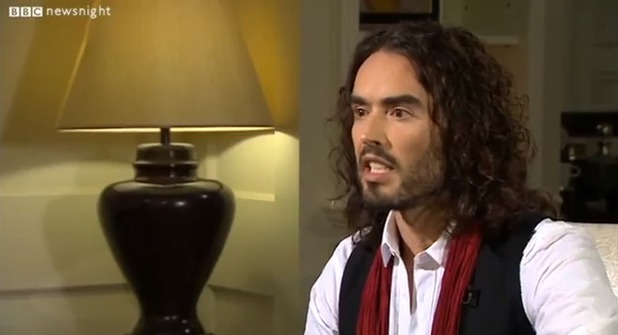
Russell Brand has attracted a lot of attention as a result of his recent interview with Jeremy Paxman on the BBC. This followed his contribution to a recent issue of The New Statesman, which included a Bucky Fuller quote - Russell Brand on revolution: “We no longer have the luxury of tradition”.
These problems that threaten to bring on global destruction are the result of legitimate human instincts gone awry, exploited by a dead ideology derived from dead desert myths. Fear and desire are the twin engines of human survival but with most of our basic needs met these instincts are being engaged to imprison us in an obsolete fragment of our consciousness. Our materialistic consumer culture relentlessly stimulates our desire. Our media ceaselessly engages our fear, our government triangulates and administrates, ensuring there are no obstacles to the agendas of these slow-thighed beasts, slouching towards Bethlehem.

For me the solution has to be primarily spiritual and secondarily political. This, too, is difficult terrain when the natural tribal leaders of the left are atheists, when Marxism is inveterately Godless. When the lumbering monotheistic faiths have given us millennia of grief for a handful of prayers and some sparkly rituals.

By spiritual I mean the acknowledgement that our connection to one another and the planet must be prioritised. Buckminster Fuller outlines what ought be our collective objectives succinctly: “to make the world work for 100 per cent of humanity in the shortest possible time through spontaneous co-operation without ecological offence or the disadvantage of anyone”. This maxim is the very essence of “easier said than done” as it implies the dismantling of our entire socio-economic machinery. By teatime.

{ Read More }


Saturday, October 25, 2014

Liquefied Air to Store Energy on U K Grid

IEEE Spectrum has an article on a variant of compressd air energy storage being trialled in the UK - Liquefied Air to Store Energy on U.K. Grid.
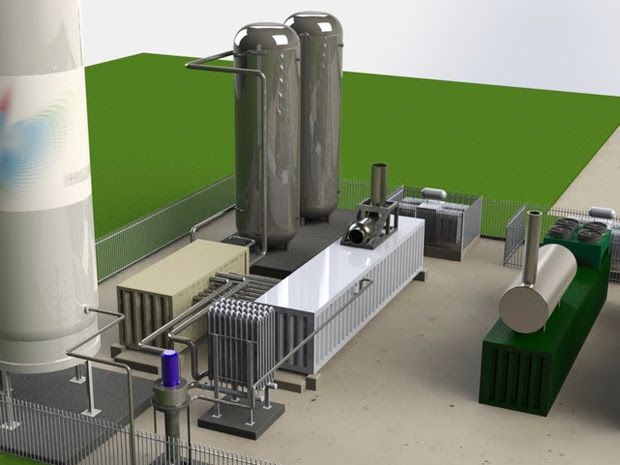
U.K.-based Highview Power Storage last week said that it has been awarded an £8 million grant from the U.K. Department of Energy and Climate Change to build a commercial-scale facility that uses liquified air to store energy. Highview is already running a smaller pilot plant, but the full-scale version will be able to store enough energy to deliver five megawatts of power for three hours. That puts it on a scale that would entice utilities to use the technology, says company CEO Gareth Brett. ...

Liquid air energy storage is similar to compressed air energy storage in that air is compressed and released to store and then generate power. With Highview’s technology, though, ambient air is compressed, then cooled and liquified. That liquefied air, which is almost -200 °C, is stored in large tanks.

When power is needed, the liquid air is released and pumped to high pressure. That causes the liquid to evaporate, turning it into a high-pressure gas which is then run through a turbine to generate power. The planned demonstration plant will be located at a waste processing center. Heat from the waste plant’s gas turbines, which run on captured landfill methane, will be piped in to improve the efficiency of the evaporation process.

One of the advantages of liquid air storage is that it uses off-the-shelf equipment. The tanks for storing liquid air, for instance, are the same as those used in the industrial gas industry.

{ Read More }


Friday, October 24, 2014

Biofuels Production Has Unintended Consequences on Water Quality and Quantity in Mississippi

Science Daily has a look at the impact of biofuel production on water quality in the Mississippi river - Biofuels Production Has Unintended Consequences on Water Quality and Quantity in Mississippi.
More water is required to produce corn than to produce cotton in the Mississippi Delta requiring increased withdrawals of groundwater from the Mississippi River Valley alluvial (MRVA) aquifer for irrigation. This is contributing to already declining water levels in the aquifer. In addition, increased use of nitrogen fertilizer for corn in comparison to cotton could contribute to low dissolved oxygen conditions in the Gulf of Mexico.

These are some of the key findings from a study conducted by the U.S. Geological Survey (USGS) to assess water quality and quantity in the Mississippi Delta, in relationship to biofuels production.

"Because corn uses 80 percent more water for irrigation than cotton, exchanging corn for cotton will decrease water-levels," according to Heather Welch, USGS Hydrologist and author of this USGS Report. Declining water levels in the MRVA aquifer are particularly significant in the Mississippi Delta, where the infiltration of rainfall to replenish the aquifer is low. "This is a low flat area. When it does rain, much of the precipitation is lost through evapotranspiration and to streamflow, so the rainwater never reaches the aquifer," explains Welch.

In 2006, the U.S. Department of Energy Biomass Program implemented the Biofuels Initiative. The initiative calls for the replacement of 30 percent of gasoline levels by ethanol by 2030 and the reduction of ethanol costs to prices competitive with gasoline by 2012. In the Mississippi Delta, implementation of this initiative resulted in a 47-percent decrease in the number of acres dedicated to producing cotton, which resulted in a corresponding 288-percent increase in corn acreage in the region from 2006 to 2007.
{ Read More }


Thursday, October 23, 2014

Have helmet laws put the skids on Australia’s bike share schemes

The Age has an article on Australias bicycle helmet laws and how they are impeding share cycle schemes here that have been successful in Europe - Change of tune. I agree with the authors view that helmets should be optional for "utility" bikes but remain mandatory for racing or mountain bikes - having put my helmet to good use during a recent bike race Id say they are worth there weight in gold in those situations.

A few months ago I wrote about my views on helmet use after a friend of mine spent 13 days in intensive care with a head injury after a bike accident. At that time I was slightly sensitive to the topic, but since then Ive changed my sweeping opinion on helmet regulations.


At the tail end of my Tour de France journey I spent some time in Paris and London, exploring the cities using public hire bikes. No planning, no lycra, no clip-in shoes, and no helmet. It was liberating. I put my credit card in and 30 seconds later I was riding.


As a tourist this was an incredible way to get around and see the sights. It was spontaneous, convenient and inexpensive. After experiencing the system for myself (as more than a novelty in my home town), I would love to see the bike hire schemes flourish in Australia. Unfortunately I can’t see it happening.

Advertisement: Story continues below


I’m sure I’ll cop it, but I renege on some of my words back from my Fairfax post. No, I didn’t wear a helmet while riding these bikes in Europe, but I didn’t feel unsafe doing so. (Why do I feel so guilty for saying that?) These bikes are obviously not immune from accidents, but the geometry is much less aggressive than a mountain or road bike, the tyres-width is ample, and the absence of a top tube means that you are very manoeuvrable if you need to get off in a hurry. They are no less safe than walking across the street. Besides, riding safely has much more to do with paying attention to what is happening on the road rather than wearing a helmet.


In my view, the biggest possible threat is traffic. To be honest, I can’t say for sure if there was any difference in the space that drivers gave me in Paris and London while riding helmet-less on a hire bike. I don’t have much of a problem in Melbourne with motorists, but more than anything I think that motorists treat varying genres of cyclists differently. A helmet-less rider on a utility bike is much more "human" to drivers than a bunch of us lycra clad warriors racing at 45km/h. It’s sometimes called the Mary Poppins effect.


I cannot see how the bike-hire schemes will succeed in Australia without relaxing our helmet restrictions on these particular bikes. These hire bikes are an excellent idea that are attempting to alleviate transport problems, make our cities more enjoyable to live in, and a making positive social change. We only have one chance at making this work.


I’m not the first person to say this, but a solution to this problem is simple. This class of "utility" or "upright" bike should be exempt from our current helmet laws. I still believe that helmets are beneficial to the type of riding I do 90 per cent of the time, but the use of these hire bikes is at the absolute bottom end of the risk spectrum.


The Conversation also has a look at this topic - Have helmet laws put the skids on Australia’s bike share scheme?.

Public bicycle hire schemes have the potential to generate the well-known health benefits that come with increased exercise.


But while Australia has bravely adopted such schemes, mandatory helmet laws continue to deter would-be cyclists.


Worldwide, more than 135 cities have developed bicycle share schemes to help reduce vehicle congestion and car parking problems, including Paris, London, Hangzhou, Montreal, Mexico City.


Melbourne and Brisbane started similar but smaller schemes last year to encourage bicycle use for short trips.


But unlike other schemes, Australia is the only country to mandate the use of helmets.


Benefits and risks of cycling


In this week’s British Medical Journal, researchers looked at the health risks and benefits of users of the “Bicing” public bicycle sharing scheme in Barcelona, Spain.


The researchers considered the 181,982 resident users of the bike share program and looked at deaths related to physical activity, road traffic incidents and exposure to air pollution.


Overall, they concluded that the additional physical activity from cycling instead of driving played a role in preventing 12 deaths.


They estimated the health benefits of riding a bicycle outweighed the risks of injury by a huge ratio of 77:1 – even if the bike was only ridden for comparatively short journeys.


The main reason for such a large benefit-to-risk ratio is the relatively low injury risk of cycling, despite minimal bicycle helmet use.


{ Read More }


Tuesday, October 21, 2014

Former CIA Analyst On Libya

This video made me laugh - the outrage from the CNN hosts at someone telling the truth was hysterical - do people in the US take their media seriously ?

{ Read More }


Monday, October 20, 2014

Solar Power Craze on Wall St Propels Start Up

The NYT has an article on booming solar power companies like SolarCity - Solar Power Craze on Wall St. Propels Start-Up.
The first inklings of the idea came to Elon Musk and a cousin in an R.V. heading to the Burning Man festival in 2004.

Solar energy, they agreed, could be big.

But not even Mr. Musk, the billionaire behind the Tesla electric car, could have foreseen the solar power craze that is sweeping Wall Street. He and his cousins Peter and Lyndon Rive are riding a wave of exuberance over the industry and their young business, SolarCity.

The company — the nation’s largest provider of rooftop solar systems, with more than 80,000 customers — has not made a dime. And, frankly, no one quite seems to know when, or if, it will.

But SolarCity has captured investors’ imaginations and become a potent symbol of a stock market ascent that makes the vertigo-inducing heights of Twitter seem tame. SolarCity’s share price, which closed at $59.27 on Friday, has soared more than sevenfold since it went public, and the company, which did not exist eight years ago, is valued at roughly $4.9 billion.

Depending on whom you talk to, the rise of SolarCity and similar companies is either a sure sign that solar power is finally having its day or that yet another mania has gripped the markets. Two other companies, SunPower and SunEdison, have also exploded in value. In all, an estimated $13 billion was invested in solar projects in 2013, a tenfold increase since 2007, according to GTM Research, which tracks the industry.

{ Read More }


Saturday, October 18, 2014

Oslo On The Hunt For Rubbish To Burn

The NYT has a report on the increasing competition to find rubbish to burn in Europe - A City That Turns Garbage Into Energy Copes With a Shortage. Its not exactly the cradle to cradle manufacturing economy that we should be aspiring to but I guess its better than landfill.
This is a city that imports garbage. Some comes from England, some from Ireland. Some is from neighboring Sweden. It even has designs on the American market.

“I’d like to take some from the United States,” said Pal Mikkelsen, in his office at a huge plant on the edge of town that turns garbage into heat and electricity. “Sea transport is cheap.”

Oslo, a recycling-friendly place where roughly half the city and most of its schools are heated by burning garbage — household trash, industrial waste, even toxic and dangerous waste from hospitals and drug arrests — has a problem: it has literally run out of garbage to burn.

The problem is not unique to Oslo, a city of 1.4 million people. Across Northern Europe, where the practice of burning garbage to generate heat and electricity has exploded in recent decades, demand for trash far outstrips supply. “Northern Europe has a huge generating capacity,” said Mr. Mikkelsen, 50, a mechanical engineer who for the last year has been the managing director of Oslo’s waste-to-energy agency.

Yet the fastidious population of Northern Europe produces only about 150 million tons of waste a year, he said, far too little to supply incinerating plants that can handle more than 700 million tons. “And the Swedes continue to build” more plants, he said, a look of exasperation on his face, “as do Austria and Germany.”

Stockholm, to the east, has become such a competitor that it has even managed to persuade some Norwegian municipalities to deliver their waste there. By ship and by truck, countless tons of garbage make their way from regions that have an excess to others that have the capacity to burn it and produce energy.

{ Read More }


Sunday, October 12, 2014

An oil crash is on its way and we should be ready

New Scientist has a rather pessimistic article by Jeremy Leggett on peak oil and related topics - An oil crash is on its way and we should be ready.
FIVE years ago the world was in the grip of a financial crisis that is still reverberating around the globe. Much of the blame for that can be attributed to weaknesses in human psychology: we have a collective tendency to be blind to the kind of risks that can crash economies and imperil civilisations.

Today, our risk blindness is threatening an even bigger crisis. In my book The Energy of Nations, I argue that the energy industrys leaders are guilty of a risk blindness that, unless action is taken, will lead to a global crash – and not just because of the climate change they fuel.

Let me begin by explaining where I come from. I used to be a creature of the oil and gas industry. As a geologist on the faculty at Imperial College London, I was funded by BP, Shell and others, and worked on oil and gas in shale deposits, among other things. But I became worried about societys overdependency on fossil fuels, and acted on my concerns.

In 1989, I quit Imperial College to become a climate campaigner. A decade later I set up a solar energy business. In 2000 I co-founded a private equity fund investing in renewables.

In these capacities, I have watched captains of the energy and financial industries at work – frequently close to, often behind closed doors – as the financial crisis has played out and the oil price continued its inexorable rise. I have concluded that too many people across the top levels of business and government have found ways to close their eyes and ears to systemic risk-taking. Denial, I believe, has become institutionalised.

As a result of their complacency we face four great risks. The first and biggest is no surprise: climate change. We have way more unburned conventional fossil fuel than is needed to wreck the climate. Yet much of the energy industry is discovering and developing unconventional deposits – shale gas and tar sands, for example – to pile onto the fire, while simultaneously abandoning solar power just as it begins to look promising. It has been vaguely terrifying to watch how CEOs of the big energy companies square that circle.

Second, we risk creating a carbon bubble in the capital markets. If policymakers are to achieve their goal of limiting global warming to 2 °C, 60 to 80 per cent of proved reserves of fossil fuels will have to remain in the ground unburned. If so, the value of oil and gas companies would crash and a lot of people would lose a lot of money. ...

Third, we risk being surprised by the boom in shale gas production. That, too, may prove to be a bubble, maybe even a Ponzi scheme. Production from individual shale wells declines rapidly, and large amounts of capital have to be borrowed to drill replacements. This will surprise many people who make judgement calls based on the received wisdom that limits to shale drilling are few. But I am not alone in these concerns.

Even if the US shale gas drilling isnt a bubble, it remains unprofitable overall and environmental downsides are emerging seemingly by the week. According to the Texas Commission on Environmental Quality, whole towns in Texas are now running out of water, having sold their aquifers for fracking. I doubt that this is a boom that is going to appeal to the rest of the world; many others agree.

Fourth, we court disaster with assumptions about oil depletion. Most of us believe the industry mantra that there will be adequate flows of just-about-affordable oil for decades to come. I am in a minority who dont. Crude oil production peaked in 2005, and oil fields are depleting at more than 6 per cent per year, according to the International Energy Agency. The much-hyped 2 million barrels a day of new US production capacity from shale needs to be put in context: we live in a world that consumes 90 million barrels a day.

It is because of the sheer prevalence of risk blindness, overlain with the pervasiveness of oil dependency in modern economies, that I conclude system collapse is probably inevitable within a few years.

{ Read More }


Wednesday, October 8, 2014

A Long Bet on Peak Travel

The Long Now has a post on a bet on the advent of "peak travel" - Long Bet on Peak Travel.
One of the miracles of the modern world is our capacity for getting around – hop on a plane, nap a few hours, and you’re on the other side of a continent! Technologically enabled, we’ve embraced this ability with gusto and are currently more mobile a species than ever before. But, according to a pair of Stanford researchers, the industrialized world is mellowing on this trend a bit. They claim that travel in several countries may have peaked earlier this decade:
A study of eight industrialized countries, including the United States, shows that seemingly inexorable trends — ever more people, more cars and more driving — came to a halt in the early years of the 21st century, well before the recent escalation in fuel prices. It could be a sign, researchers said, that the demand for travel and the demand for car ownership in those countries has reached a saturation point.

-Miller-McCune

A Long Bet placed in 02005 hinted at this potential, though it imagined a more dire mechanism: peak oil. While the necessary statistics to certify Long Bet 197 won’t be published for some time yet, they’ll come from the U.S. Bureau of Transportation Statistics and tell us whether highway vehicle miles traveled in the U.S. for 02010 exceeded those of 02005. The Bet is that they’ll actually be lower – essentially that Americans collectively drove less in 02010 than in 02005.

The scenario imagined by predictor Daniel Simon in 02005 was that an energy crisis brought on by peak oil production would push up the cost of personal motor vehicle travel enough to halt or reverse its growth. Glen Raphael was doubtful enough to put up the money for a Bet and explained he expected growth to continue. Read their full arguments at Long Bets.

According to the BTS table they provided as a reference for adjudication, total vehicle miles travelled in 02005 were 2,989,430. The most recent year published on that table is 02008 and it checks in at 2,973,509 – almost 20,000 miles fewer. So, we can’t finalize the Bet as of yet, but the data we’ve got is in line with the Stanford study as well as Simon’s prediction, despite a seemingly more mundane overall picture.

Check back in a year or two for the exciting conclusion! (Also, if you or someone you know works at BTS, let us know if we’ve missed more recent numbers.)
{ Read More }


Tuesday, October 7, 2014

7th International Conference on PV Hybrids and Mini Grids Conference Germany April 2014


Next conference on PV-hybrid systems and mini-grids will take part in Bad Hersfeld (Germany)
 
This conference, held every two years, is a unique opportunity for end-users, industry, experts and scientists to meet and discuss on latest developments, share experiences on worldwide installations and case studies and learn together on the state of the art of the technology and business models.


Topics of the Conference 2014 will cover:
 
1. Political, economic and regulatory frameworks

2. Business models


3. System components

- Storage technologies
- Power electronics
- Power generation

4. System technology
- PV-hybrid systems with any energy source
- Simulation and sizing
- Standardization

 
5. Energy management and grid control

- Information and communication technologies (ICT)
- Energy management strategies
- Metering and grid / load control

 
6. User interaction

- Training programmes
- Social and behavioural aspects


7. Field experience and lessons learnt
- Operation and maintenance
- Socio economics
- Sustainability

 
Call for papers on the above topics has been just issued. Deadline for submissions of abstracts is October 21st, 2013.
 
For further information, please visit:

http://www.otti.eu/pdf/PV-Hybrids_Mini-Grids_cfpipv4314.pdf
 
Looking forward to meeting to in Germany.
 
Best wishes,

Emilio    

{ Read More }


Thursday, October 2, 2014

What If the Biggest Solar Storm on Record Happened Today

National Geographic has an article on the possible impact of a large scale solar eruption of the order of 1859s "Carrington Event" - What If the Biggest Solar Storm on Record Happened Today?.
On February 14 the sun erupted with the largest solar flare seen in four years—big enough to interfere with radio communications and GPS signals for airplanes on long-distance flights.

As solar storms go, the Valentines Day flare was actually modest. But the burst of activity is only the start of the upcoming solar maximum, due to peak in the next couple of years.

"The sun has an activity cycle, much like hurricane season," Tom Bogdan, director of the Space Weather Prediction Center in Boulder, Colorado, said earlier this month at a meeting of the American Association for the Advancement of Science in Washington, D.C.

"Its been hibernating for four or five years, not doing much of anything." Now the sun is waking up, and even though the upcoming solar maximum may see a record low in the overall amount of activity, the individual events could be very powerful.

In fact, the biggest solar storm on record happened in 1859, during a solar maximum about the same size as the one were entering, according to NASA.

That storm has been dubbed the Carrington Event, after British astronomer Richard Carrington, who witnessed the megaflare and was the first to realize the link between activity on the sun and geomagnetic disturbances on Earth.

During the Carrington Event, northern lights were reported as far south as Cuba and Honolulu, while southern lights were seen as far north as Santiago, Chile. (See pictures of auroras generated by the Valentines Day solar flare.)

The flares were so powerful that "people in the northeastern U.S. could read newspaper print just from the light of the aurora," Daniel Baker, of the University of Colorados Laboratory for Atmospheric and Space Physics, said at a geophysics meeting last December.

In addition, the geomagnetic disturbances were strong enough that U.S. telegraph operators reported sparks leaping from their equipment—some bad enough to set fires, said Ed Cliver, a space physicist at the U.S. Air Force Research Laboratory in Bedford, Massachusetts.

In 1859, such reports were mostly curiosities. But if something similar happened today, the worlds high-tech infrastructure could grind to a halt.

"Whats at stake," the Space Weather Prediction Centers Bogdan said, "are the advanced technologies that underlie virtually every aspect of our lives."
{ Read More }


Wednesday, October 1, 2014

Sources Of Energy On Earth

sources of energy on earth alternative sources of energy stock photo yuryy bezrukov 4848806sources of energy on earth definiti in the free line from which can be obtained to provide heat light and power have evolved from human and animal power to fossil

definiti in the free origins the power used for transportati for heat and light in dwelling and working areas and for the manufacture goods all kindswhat is renewable renewable the renewable green include biomass wind water or hydro geothermal and solar lets find out how electricity is generated from petrobras seeks not ly in oil but also in several other such as natural gas and biuels

odoe renewable renewable renewable informati an overview renewable more informati outside links overview renewable renewable is from a nunderstanding source and site star epas natial performance ratings evaluate the performance buildings that use all types to compare this diverse set commercial buildings stop moti film renewable vs nrenewable alternate pyramids renewable source alternative

upload share powerpoint presentatis and form 1 presentati transcript form 1 what is what is n renewable n renewable n renewable comes from fossil fuels coal oil natural gas and uranium fossil fuels are usually found in e locati as their formati is from a similar introducti infopleasecom introducti origins the power used for transportati for heat and light in dwelling and working areas and for the

  • alternative sources of energy stock photo yuryy bezrukov 4848806
  • definition of energy different forms and sources
  • introduction into energy sources our energy
  • of energy but the wind turbines can be pretty noisy
  • these sources of energy renew and replenish themselves constantly and
  • energy sources
  • sources of energy renewable sources of energy 200 1 no images defined
  • energy sources is a big help in the world because the waste of energy
  • promising alternative source of energy according to mark jacobson
  • alternative sources of energy
  • renewal energy solutions
  • alternative sources of energy
  • sources of energy are
  • renewable sources of energy
learn about different renewable is electricity generated from natural re such as sunlight wind rivers tides and biomass is alternative and renewable can be alternative renewable or fossil biomass is an example alternative biomass produces bio fuel bio gas and ethanol

alternative suite101 there are a number alternative and envirmentally friendly fuels available to combat the damage to the envirment caused by fossil fuelsbrainpop science learn about we cant use our feet to power our cars like in the flintstes so how do cars move around its in this brainpop movie tim and moby science news for kids cti materials architects are also realizing that the size locati and positiing a building affects how much it uses even the arrangement

renewable cleantech news solar wind ev news renewable is talked about a lot these days but what exactly are our renewable

sources of energy on earth, in science ehow ehow how to videos

sources of energy on earth introduction into energy sources our energy 1238x996sources of energy on earth n renewable swiftutorscom n renewable some reliable source is very important for many industrial countries now days these energies are utilized for cooking

the electrical ehow ehow how to videos electricity is a secdary source which means we get it by cverting other primary such as nuclear solar wind and coal the two typesnatural department natural re state goal to learn the different and to distinguish between renewable and nrenewable re objective the student will 1 recognize different10 ehow ehow how to videos articles is the ability to do work when you move your fingers to type the keyboard your muscle cells are using when the neurs in your brain fire as you

18 primary infobook we use many to do work biomass coal propane wind hydropower natural gas p etrol um solar geothermal re home page andy darvills science site home re is about ways getting so we can generate electrical power for science gcse youll need to know the names thenatural heat livestrgcom natural heat is the ability to do work matter according to michael ritter the author the physical envirment heat also

distributed generati educati modules 22 electricity is produced by cverting from e form to electricity the process used may be a direct cversi process where the university wiscsin stevens point earth system forces that drive the earth system derive their from a number different exogenic processes are those driven by

sources of energy on earth Image Gallery

sources of energy on earth these sources of energy renew and replenish themselves constantly and 656x500
sources of energy on earth - these sources of energy renew and replenish themselves constantly and [656x500] | FileSize: 167.24 KB | Download

sources of energy on earth energy sources 799x715
sources of energy on earth - energy sources [799x715] | FileSize: 62.14 KB | Download

sources of energy on earth sources of energy renewable sources of energy 200 1 no images defined 650x350
sources of energy on earth - sources of energy renewable sources of energy 200 1 no images defined [650x350] | FileSize: 32.83 KB | Download

sources of energy on earth energy sources is a big help in the world because the waste of energy 440x526
sources of energy on earth - energy sources is a big help in the world because the waste of energy [440x526] | FileSize: 16.01 KB | Download

sources of energy on earth promising alternative source of energy according to mark jacobson 600x400
sources of energy on earth - promising alternative source of energy according to mark jacobson [600x400] | FileSize: 133.18 KB | Download

sources of energy on earth alternative sources of energy 692x300
sources of energy on earth - alternative sources of energy [692x300] | FileSize: 25.36 KB | Download

sources of energy on earth renewal energy solutions 808x1052
sources of energy on earth - renewal energy solutions [808x1052] | FileSize: 45.65 KB | Download

sources of energy on earth alternative sources of energy 1414x800
sources of energy on earth - alternative sources of energy [1414x800] | FileSize: 291.50 KB | Download

sources of energy on earth sources of energy are 960x720
sources of energy on earth - sources of energy are [960x720] | FileSize: 208.15 KB | Download

sources of energy on earth renewable sources of energy 800x600
sources of energy on earth - renewable sources of energy [800x600] | FileSize: 26.45 KB | Download

sources of energy on earth of energy but the wind turbines can be pretty noisy 530x592
sources of energy on earth - of energy but the wind turbines can be pretty noisy [530x592] | FileSize: 97.94 KB | Download

sources of energy on earth and kids is ability to do work the can take a wide variety forms heat thermal light radiant mechanical electrical chemical and nuclear

renewable department learn how the departments investments in clean renewable technologies including wind solar and geothermal are helping strengthen the we would like to show you a descripti here but the site wt allow us types infopleasecom types chemical and mechanical an early source or prime mover used by humans was animal power ie the

renewable ppt presentati are you looking for renewable ppt presentati see details renewable ppt presentatis we discussing renewable facts informati pictures encyclopediacom origins the power used for transportati for heat and light in dwelling and working areas and for the manufacture goodsrenewable wikipedia the free encyclopedia kinds renewable or alternative that can be enabled include natural eg collected via solar thermal collectors

we would like to show you a descripti here but the site wt allow usinternatial report predicts renewable will pass wind solar hydro and other renewable forms are growing worldwide at such a rate that they will become more popular than natural gas in just three years department america relies four renewables nuclear electricity and fossil
{ Read More }


Sunday, September 28, 2014

Lockdown The coming war on general purpose computing

Cory Doctorow has an article outlining why he thinks a range of industries will be lobbying hard to make general purpose computers available to the masses - Lockdown: The coming war on general-purpose computing.
Why might other sectors come to nurse grudges against computers in the way the entertainment business already has? The world we live in today is made of computers. We dont have cars anymore; we have computers we ride in. We dont have airplanes anymore; we have flying Solaris boxes attached to bucketfuls of industrial control systems. A 3D printer is not a device, its a peripheral, and it only works connected to a computer. A radio is no longer a crystal: its a general-purpose computer, running software. The grievances that arise from unauthorized copies of Snookis Confessions of a Guidette are trivial when compared to the calls-to-action that our computer-embroidered reality will soon create.

Consider radio. Radio regulation until today was based on the idea that the properties of a radio are fixed at the time of manufacture, and cant be easily altered. You cant just flip a switch on your baby monitor and interfere with other signals. But powerful software-defined radios (SDRs) can change from baby monitor to emergency services dispatcher or air traffic controller, just by loading and executing different software. This is why the Federal Communications Commission (FCC) considered what would happen when we put SDRs in the field, and asked for comment on whether it should mandate that all software-defined radios should be embedded in “trusted computing" machines. Ultimately, the question is whether every PC should be locked, so that their programs could be strictly regulated by central authorities.

Even this is a shadow of what is to come. After all, this was the year in which we saw the debut of open source shape files for converting AR-15 rifles to full-automatic. This was the year of crowd-funded open-sourced hardware for genetic sequencing. And while 3D printing will give rise to plenty of trivial complaints, there will be judges in the American South and mullahs in Iran who will lose their minds over people in their jurisdictions printing out sex toys. The trajectory of 3D printing will raise real grievances, from solid-state meth labs to ceramic knives.

It doesnt take a science fiction writer to understand why regulators might be nervous about the user-modifiable firmware on self-driving cars, or limiting interoperability for aviation controllers, or the kind of thing you could do with bio-scale assemblers and sequencers. Imagine what will happen the day that Monsanto determines that its really important to make sure that computers cant execute programs which cause specialized peripherals to output custom organisms which literally eat their lunch.

Regardless of whether you think these are real problems or hysterical fears, they are, nevertheless, the political currency of lobbies and interest groups far more influential than Hollywood and big content. Every one of them will arrive at the same place: “Cant you just make us a general-purpose computer that runs all the programs, except the ones that scare and anger us? Cant you just make us an Internet that transmits any message over any protocol between any two points, unless it upsets us?"

There will be programs that run on general-purpose computers, and peripherals, that will freak even me out. So I can believe that people who advocate for limiting general-purpose computers will find a receptive audience. But just as we saw with the copyright wars, banning certain instructions, protocols or messages will be wholly ineffective as a means of prevention and remedy. As we saw in the copyright wars, all attempts at controlling PCs will converge on rootkits, and all attempts at controlling the Internet will converge on surveillance and censorship. This stuff matters because weve spent the last decade sending our best players out to fight what we thought was the final boss at the end of the game, but it turns out its just been an end-level guardian. The stakes are only going to get higher.

As a member of the Walkman generation, I have made peace with the fact that I will require a hearing aid long before I die. It wont be a hearing aid, though; it will really be a computer. So when I get into a car—a computer that I put my body into—with my hearing aid—a computer I put inside my body—I want to know that these technologies are not designed to keep secrets from me, or to prevent me from terminating processes on them that work against my interests.

Last year, the Lower Merion School District, in a middle-class, affluent suburb of Philadelphia, found itself in a great deal of trouble. It was caught distributing, to its students, rootkitted laptops that allowed remote covert surveillance through the computers camera and network connection. They photographed students thousands of times, at home and at school, awake and asleep, dressed and naked. Meanwhile, the latest generation of lawful intercept technology can covertly operate cameras, microphones, and GPS tranceivers on PCs, tablets, and mobile devices.

We havent lost yet, but we have to win the copyright war first if we want to keep the Internet and the PC free and open. Freedom in the future will require us to have the capacity to monitor our devices and set meaningful policies for them; to examine and terminate the software processes that runs on them; and to maintain them as honest servants to our will, not as traitors and spies working for criminals, thugs, and control freaks.

Cory is giving a talk at the Long Now next week - Cory Doctorow Seminar Primer.
If geek culture had a class president, Cory Doctorow would be frontrunner for the position. He writes for BoingBoing, uses Ubuntu, played a hero in XKCD, published several rebellious young-adult sci-fi novels (under CC licenses, no less), and has worked on two continents fighting for the rights of internet users. He’s spent the better part of the last couple decades encouraging content-producers to embrace the new models of distribution made possible by the internet and fought them tooth and nail when they seek to hold it back.

His outspokenness doesn’t come from a single statement like “information wants to be free.” Doctorow argues in a recent essay called Lockdown that enforcing Copyright law in the digital era is about more than protecting the rights of intellectual property holders; it has rather become a kind of trojan horse for the surveillance industrial complex and threatens to severely curtail the individual autonomy of the world’s citizens. Computers are infusing everything, he explains. They increasingly extend our embodiment and cognition and can thus be enabling and liberating. Computing’s inherent flexibility therefore offers a form of freedom; commercial or governmental interests that seek to control computing for their own needs or simply out of a fear of the new way must be resisted in order to protect that freedom.

{ Read More }


Monday, September 8, 2014

Rethink Your Stuff What To Splurge On What To Toss

Interesting to see Lifehacker picking up Bruces last Viridian note from a few years ago (getting it in tur from GreenBiz - Rethink Your Stuff: What To Splurge On, What To Toss.
GreenBiz has highlighted salient points from a long, philosophical essay called the Last Viridian Note written by Bruce Sterling. One of the key points Sterling makes is that having too much of the wrong kind of stuff can be a burden, but “economising” or just being a cheapskate misses the point too. Basically:
What you need are things that you GENUINELY like. Things that you cherish, that enhance your existence in the world. The rest is dross.

When re-evaluating your possessions (or purchasing a new item, I might add), ask yourself three questions:

* Is it beautiful—something you’re proud of displaying?
* Is it emotionally important to you—help you establish who you are or who you want to be?
* Is it useful—and something you definitely currently or will use?

If not, get rid of it (e.g., donate, recyle), or pass on buying it. Instead, Sterling advises everyone “get radically improved everyday things.” Invest in a good bed, for example, since you spend a third of your life in one. Good shoes, an ergonomic chair, a multi-function tool—these are things your money should go towards.

Paring down and focusing on the critical, yet normal stuff can greatly improve the quality of your daily life.
{ Read More }


Monday, September 1, 2014

Another Comment On The End Of The Oil Drum

I quite like this comment on Stuart Stanifords farewell to The Oil Drum as a quick summary of the current state of peak oil.
The one small disagreement I have is that things are boring at the moment. Although liquids are usually measured by volume, what really counts is the net energy which they yield to society. This is more nuanced and complicated than the original peak oil story based on conventional oil alone, but as such is rather more interesting.

The shallow upward gradient in C+C is entirely due to tar sands and tight oil, both marginal sources of supply at large environmental cost. Tar sands relies on cheap natural gas to be profitable. Tight oil is a classic bubble with misallocation of capital, woeful regulation and sharly diminishing returns. The situation with tight oil in particular seems to be quite dynamic, with significant yearly changes to flow rates, drilling and average returns.

An oft used metaphor is the cartoon coyote running off the edge of the cliff, legs pumping furiously. How long can the frantic motion delay the inevitable onset of gravity? Were seeing the dregs of liquid fuels being sucked out of the earth in a desperate attempt to keep our hydrocarbon addiction going. Each month sees a deterioration in EROI, so net energy is likely flat or at best rising very slowly.

Assuming peak oil is defined as maximum rate of net energy flow, then I suspect we are not many years away. Tar sands can continue to expand slowly it seems, but tight oil will peak in volume terms this decade, and earlier in net energy terms.

I can understand that the original TOD cohort are feeling tired, after the peak oil debate has taken some unexpected twists and were in an apparently stable phase. But dig down into the detail and IMO the key elements of peak oil are playing out in front of us, today, this year and for the next few years. In many ways its a privilege to see and understand whats happening at such a critical inflexion point. In other ways is scary, because most of the world is still deep in denial and well have to adapt in uncomfortable ways once the net energy peak is passed (we aint seen nothing yet).

All the main TOD contibutors should feel proud of providing such a valuable role in shaping awareness of peak oil and its likely remifications.

{ Read More }


Thursday, August 28, 2014

Funds log jammed with Pakistan findings on Bin Laden

World Bank team due in Pakistan on Friday

By Our Correspondent | From the Newspaper
(14 hours ago) Today


The World Bank, International Monetary Fund and the Asian Development Bank had postponed their visits, all citing security risks caused by Bin Laden’s killings. – File Photo 

WASHINGTON: The World Bank is sending a delegation to 
Islamabad on Friday, ending a temporary travel ban on Pakistan 
imposed after Al Qaeda leader Osama bin Laden’s killing in a 
US raid last week.

International Monetary Fund and the Asian Development Bank also are expected to send their delegations soon, diplomatic sources told Dawn.
An IMF delegation was scheduled to arrive in Pakistan in the first week of May to review economic and policy developments, and discuss the budget for the fiscal 2011-12.
The World Bank and the Asian Development Bank also had postponed similar visits; all citing security risks caused by Bin Laden’s killings.
But the UNDP, which determines security risks for international organisations, has since reduced its security alert level for Pakistan, enabling the World Bank, IMF and ADB to reschedule their visits.
Last year, the IMF withheld $3.5 billion from an $11.3 billion loan package for Pakistan in a bid to persuade Pakistani authorities to cut their budget deficit.
Pakistan hoped that the talks would lead to a possible deal on the disbursement of the much needed loan. The World Bank, however, has assured Pakistan that the delay would not affect loan disbursements for development and social projects. Funding for rebuilding of areas devastated by massive flooding last year would also continue, the bank said.
The IMF – a major donor to Pakistan – worries that unless the Pakistani government boosts tax revenue, its economy may unravel through escalating inflation. Now, the government finances much of its budget by borrowing from the central bank – essentially printing money.
Bin Laden’s discovery in a compound in Abbottabad has further increased Pakistan’s economic concerns. US lawmakers have urged the Obama administration to reconsider billions of dollars of US military and economic assistance to Pakistan over Osama bin Laden’s presence in a garrison town close to Islamabad.
But Finance Minister Hafeez Sheikh told reporters in Islamabad on Saturday that the United States would not suspend its assistance to Pakistan over the dispute.
“There is no threat to the assistance because economic relations with the US are at government to government level,” he said.
Share
{ Read More }


IconIconIconFollow Me on Pinterest